Showing posts with label #historicalplace. Show all posts

Saturday, December 3, 2016

हसरते... Desires...


"बड़ी हसरत है पूरा एक दिन इक बार मैं अपने लिए रख लूँ
तुम्हारे साथ पूरा एक दिन बस खर्च करने की तमन्ना है !"


I have that strange desire, to keep an entire day hidden from everyone, and keep it to myself ,
and spend it miserly, the way near empty tap does, in painting the moles, on your blue white chest ...


(Sarkhez Roza, Ahmadabad, Gujarat. India).


Friday, December 2, 2016

Short Story of a City - Bhadra Fort, Ahmadabad.


Ahmedabad gets its name from king Ahmed Shah Abdali who ruled and built this formidable city in the 14 the century. Ahmedabad gets its name from king Ahmed Shah Badshah who ruled and built this formidable city in the 14 the century. Ahmedabad is also known by a variety of other names like: Rajnagar, Shrinagar, Amdavad , Ahimdavad, Ahamdavad, Ahamadpur, Akmipur and Ahmednagar. Legendary historian Todalmal and celebrated musician Tansen who were two intellectuals from Badshah Akbar’s court, were actually from Ahmedabad


Thursday, November 24, 2016

Isa Khan's Tomb - Arches of the Mughal Architecture.


One of the prominent feature of Mughal architecture directly related to defence are kanguras, or battlements.

Kanguras were not a Mughal invention; they had been around for centuries in India before Babar arrived. In fact, kanguras—in the form of roughly triangular or rectangular shapes—can be seen crowning the walls of early medieval forts in Delhi, including Tughlaqabad.

Well before the Mughals took over, kanguras had become decorative elements of architecture.This is why rows of kanguras can be seen in buildings of a very varied nature, all the way from mosques to tombs, sarais, and (of course), forts and palaces.

{ Kanguras (battlements) atop the main gate of the Agra Fort.}

Another architectural element that had been in use long before the Mughal period was the Pishtaq, or niche . At its most basic, this is a quadrilateral shelf-like niche let into a wall.

These started off (like the kanguras and damaagas) as a practical element of architecture: Pishtaqs could be used as a shelf, to store items, and to hold lamps to illuminate a chamber.Unlike kanguras or damaagas, however, pishtaqs retained their functionality, as a receptacle for lamps.

{This row of Pishtaqs at the Red Fort are in front of the Rang Mahal.}

In pre-Mughal Delhi, for example, Pishtaqs were very common as a form of decoration in mosques. (especially during the era of the Lodhi Sultans).

An example of a highly ornate Pishtaq, from the Lodhi-era mosque at Bada Gumbad (Delhi) and Isa Khan's Tomb in Nizamuddin (Delhi). 

One interesting example of Pishtaqs fulfilling both functional and decorative roles is in garden pavilions. For example, at the Saawan and Bhaadon pavilions in the Hayat Baksh Bagh (at the Red Fort), a series of Pishtaqs carved from white marble cover the front part of the platform.

During the heyday of the Mughals, these Niches used to hold silver vases filled with golden flowers during the day, and burning lamps at night: a pretty sight indeed.

{In Delhi's Hayat Baksh Bagh, a view of cusped arches and a chadar, at one of the garden pavilions.}

Garden pavilions also often incorporated another important feature of Mughal architecture, the Chadar.

Chadar is a stone slope which acts as the bed for a water channel when it descends from a higher level to a lower one.The chadar is lightly carved with a pattern of shallow scallops or similar repetitive patterns.Water flowing over these ripples pleasingly.

{A Chadar - a carved slope for a water channel - at Red Fort and Isa Khan's Tomb.}

Lastly, one architectural feature that is not just typically Mughal, but can actually be traced back quite specifically to Shahjahan’s reign.

This is the ‘ Daantedaar Mihrab ’, also known as the denticular arch , the scalloped arch , or the cusped arch , because it consists of a series of semi-circular scallop-like cut-outs that form the inside of the arch.

{An example of a cusped arch - at Safdarjang's tomb, Humayun's Tomb.}

Some believe that Shahjahan himself invented the daantedaar mihrab ; at any rate, it is also commonly called a Shahjahani arch

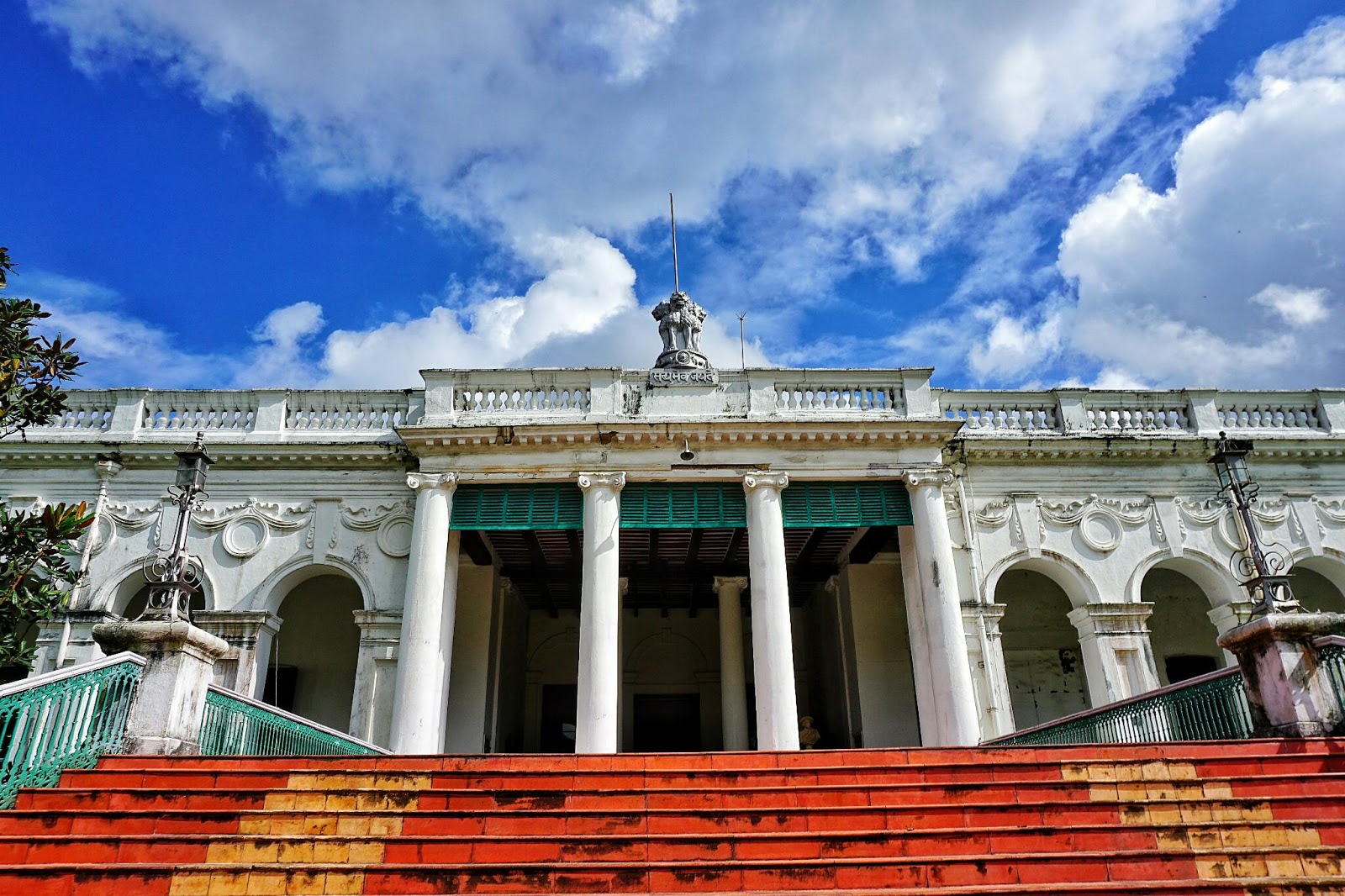
Calcutta Chromosomes - Colonial Stories

Monday, November 21, 2016

Sarkhez Roza - The Faith Keeper!


"In the epiphany of a slightest light I could see his bending broom cleaning all the mirth that touched his house, where his God is resting.

I could see his body swaying in an unknown hymn sung of course in His God's praise. I could feel how his faint smile touching the lip of the fallen sun's rays and spreading across the floor like stars in the dark blue sky... 

I could smell the aroma of his words entering into my burning chest and washing the dusts lying hidden and cold. Is He the savior of mine epilepsy? 

I don't know many things. I will not know many more things. I will only remember how his faith was cleansing my arid dry skin and left me in an unhindered kindness towards me!"

He's the Faith Keeper!