Showing posts with label #India. Show all posts
Monday, November 28, 2016
White Desert Story - In search of Water
Labels:
#blackandwhite
,
#desert
,
#Gujarat
,
#India
,
#indiawithsatbiswas
,
#lonelytraveller
,
#Rannofkaachh
,
#Runnofkutch
,
#storiesofindia
,
#Travel
,
#travelphotography
,
#Water
,
#Whitedesert
Friday, November 25, 2016
Metaphors of a City - Ahmadabad
Labels:
#Ahmadabad
,
#blackandwhite
,
#Gujarat
,
#India
,
#indianstreet
,
#indiawithsatbiswas
,
#monochrome
,
#storiesofindia
,
#streetphotography
,
#talesofacity
,
#Travel
,
#travelphotography
Thursday, November 24, 2016
सहरनामा", An Abstract of a City - Short stories of a city called, Ahmadabad.
"कहानीया, बस , तीन लफ्जो की होती है,
लेकिन, क्यों और कैसे ।
बाकी सब बाते है।। "
All stories are a lie.In bits and pieces...
- Night Walk in Ahmadabad with Cine Prime Lens DS 50mm, 1.5T.
Labels:
#Ahmadabad
,
#blackandwhite
,
#Cinelens
,
#filmphotography
,
#Gujarat
,
#India
,
#indianstreet
,
#indiawithsatbiswas
,
#nightphotography
,
#storiesofindia
,
#streetphotography
,
#talesofacity
,
#सहरनामा
सहरनामा", An Abstract of a City - Short stories of a city called, Ahmadabad.
"ढूंढता रहता हूं ऐ ‘इकबाल’ अपने आप को,
आप ही गोया मुसाफिर, आप ही मंजिल हूं मैं ।"
"I loved the city.We were anonymous, and even then I had the sense that cities were yielding; that they moved over and made room.
I loved the spread of the lonely night. Loved how the dim faint yellow bulb, waiting for a shape to walk in, sometime, and bring a fresh array of noise.
I could never imagine how much I loved noises, until the silent lips of the unknown man, looking out for words. Words he wanted to utter but no one to hear..."
- Night Walk in the old city of Ahmadabad with Cine Prime Lens DS 50mm, 1.5T.
Labels:
#Ahmadabad
,
#blackandwhite
,
#Cinelens
,
#India
,
#indianstreet
,
#indiawithsatbiswas
,
#nightphotography
,
#storiesofindia
,
#streetphotography
,
#talesofacity
,
#Travel
,
#travelphotography
,
#सहरनामा
Salaam Bombay - Let us run away (Love in the time of Trucks)
In the '80s, listening to Elvis and others on the radio in Bombay - it didn't feel alien. Noises made by a truck driver from Vasai, Colaba, seemed relevant to a middle-class kid growing up on the other side of the world.That has always fascinated me.
And what most fascinated me is the thought of having a Truck, that would one day help me pick up the neighbour gal i love and run away. Run away far from the madding crowd and just look at her face properly. For Once!

Labels:
#Bombay
,
#India
,
#indianstreet
,
#indiawithsatbiswas
,
#Mumbai
,
#SalaamBombay
,
#storiesofindia
,
#streetphotography
,
#Travel
,
#travelphotography
Salaam Bombay - What will you wear?
Bombay is the Retail capital of India from the previous partition era with its huge array of goods and spread of market.What makes it unique is the diversity of such markets making the city a paradise for all sorts of people.From the riches to the poor.
In an interview with The Newyork Times Karl Lagerfield from the House of Channel said that the emergence of fashion begins largely from a popular culture and he rates Bombay for such inspiration only after Newyork and Paris.
A good flea market is a shopper’s and fashion designers paradise and Bombay is definitely one of that!
The flea or the street markets in Bombay offer a good deal of opportunities for the shopaholic to indulge in luxuriant shopping. Who would miss a chance to buy the most stylish and fanciful attire that too at a good bargain?
Shopping at the flea markets of Bombay is as essential as visiting the Gateway of India! So here is a small insight of the shopping paradise of the city of Bombay
1. Colaba Causeway-
This is one place where you would get everything, quite literally! Handicrafts, clothes, books or jewellery; anything that you could possibly think of. And when you get tired drop-in at the Leopold’s Café, one of the most famous hangout areas in Mumbai.-
2. Linking Road-
A vibrant amalgamation of traditional and modern, this place is one of the most crowded places of Mumbai. Avoid visiting this market on Sundays if you don’t like congested areas.-
3. Crawford Market-
Nestled in a historical colonial building, this is one of the oldest markets of Bombay. Fruits and vegetables are its specialties. There is also a special area devoted to pets of all kinds.-
4. Fashion Street-
This place has the highest fashion quotient in Bombay and the locals can swear by the same. With over 150 stalls, Fashion Street is quite popular amongst the youngsters.-
5. Chor Bazaar-
Initially, this was not actually a thieves market!The mispronunciation of British changed the name of this place from Shor Bazaar to Chor Bazaar and then eventually it lived up to its name! If vintage is your taste, strive through the crowded lanes of this market to get your hands on some of the most unique items of all times. -
Street Walk in Colaba, Bombay. Film Photography, Provia.
Labels:
#Bombay
,
#Colaba
,
#filmphotography
,
#India
,
#indianstreet
,
#indiawithsatbiswas
,
#Mumbai
,
#storiesofindia
,
#streetphotography
,
#travelphotography
Salaam Bombay - The Character of a House (The Magen David)
This house is supposedly older than the first British settlement in Bombay Presidency and dates back to early 1700's when Bombay was governed by the Portuguese and owned by the famous Jewish Trading family.
Now the emblem on the house is called The Magen David ( Shield of David, or as it is more commonly known, the Star of David ) which is the symbol most commonly associated with Judaism today, but it is actually a relatively new Jewish symbol.
It is supposed to represent the shape of King David's shield (or perhaps the emblem on it), but there is really no support for that claim in any early rabbinic literature.The symbol is not mentioned in rabbinic literature until the middle ages.
Scholars such as Franz Rosenzweig have attributed deep theological significance to the symbol.For example, some note that the top triangle strives upward, toward G-d, while the lower triangle strives downward, toward the real world.
Some note that the intertwining makes the triangles inseparable, like the Jewish people.Some say that the three sides represent the three types of Jews: Kohanim, Levites and Israel. Some note that there are actually 12 sides (3 exterior and 3 interior on each triangle), representing the 12 tribes.
While these theories are theologically interesting, they have little basis in historical fact.
The symbol of intertwined equilateral triangles is a common one in the Middle East and North Africa, and is thought to bring good luck. It appears occasionally in early Jewish artwork, but never as an exclusively Jewish symbol. The nearest thing to an "official" Jewish symbol at the time was the menorah.
Labels:
#architecture
,
#Bombay
,
#David
,
#heritage
,
#India
,
#indiawithsatbiswas
,
#Jewish
,
#Mumbai
,
#oldcity
,
#oldhouse
,
#SalaamBombay
,
#streetphotography
,
#Travel
,
#travelphotography
Isa Khan's Tomb - Arches of the Mughal Architecture.
One of the prominent feature of Mughal architecture directly related to defence are kanguras, or battlements.
Kanguras were not a Mughal invention; they had been around for centuries in India before Babar arrived. In fact, kanguras—in the form of roughly triangular or rectangular shapes—can be seen crowning the walls of early medieval forts in Delhi, including Tughlaqabad.
Well before the Mughals took over, kanguras had become decorative elements of architecture.This is why rows of kanguras can be seen in buildings of a very varied nature, all the way from mosques to tombs, sarais, and (of course), forts and palaces.
{ Kanguras (battlements) atop the main gate of the Agra Fort.}
Another architectural element that had been in use long before the Mughal period was the Pishtaq, or niche . At its most basic, this is a quadrilateral shelf-like niche let into a wall.
These started off (like the kanguras and damaagas) as a practical element of architecture: Pishtaqs could be used as a shelf, to store items, and to hold lamps to illuminate a chamber.Unlike kanguras or damaagas, however, pishtaqs retained their functionality, as a receptacle for lamps.
{This row of Pishtaqs at the Red Fort are in front of the Rang Mahal.}
In pre-Mughal Delhi, for example, Pishtaqs were very common as a form of decoration in mosques. (especially during the era of the Lodhi Sultans).
An example of a highly ornate Pishtaq, from the Lodhi-era mosque at Bada Gumbad (Delhi) and Isa Khan's Tomb in Nizamuddin (Delhi).
One interesting example of Pishtaqs fulfilling both functional and decorative roles is in garden pavilions. For example, at the Saawan and Bhaadon pavilions in the Hayat Baksh Bagh (at the Red Fort), a series of Pishtaqs carved from white marble cover the front part of the platform.
During the heyday of the Mughals, these Niches used to hold silver vases filled with golden flowers during the day, and burning lamps at night: a pretty sight indeed.
{In Delhi's Hayat Baksh Bagh, a view of cusped arches and a chadar, at one of the garden pavilions.}
Garden pavilions also often incorporated another important feature of Mughal architecture, the Chadar.
A Chadar is a stone slope which acts as the bed for a water channel when it descends from a higher level to a lower one.The chadar is lightly carved with a pattern of shallow scallops or similar repetitive patterns.Water flowing over these ripples pleasingly.
{A Chadar - a carved slope for a water channel - at Red Fort and Isa Khan's Tomb.}
Lastly, one architectural feature that is not just typically Mughal, but can actually be traced back quite specifically to Shahjahan’s reign.
This is the ‘ Daantedaar Mihrab ’, also known as the denticular arch , the scalloped arch , or the cusped arch , because it consists of a series of semi-circular scallop-like cut-outs that form the inside of the arch.
{An example of a cusped arch - at Safdarjang's tomb, Humayun's Tomb.}
Some believe that Shahjahan himself invented the daantedaar mihrab ; at any rate, it is also commonly called a Shahjahani arch.
Labels:
#architecture
,
#Delhi
,
#heritage
,
#historicalplace
,
#India
,
#indiawithsatbiswas
,
#indosarcanic
,
#isakhan'stomb
,
#Islamic
,
#Mughal
,
#Travel
,
#travelphotography
,
#worldheritage
The Humayun's Tomb - Characteristics of Indo-Islamic architecture
Humayun's tomb (Persian: آرامگاه همایون Maqbara e Humayun Turkish : Hümayun Kabri ) is the tomb of the Mughal Emperor Humayun in Delhi , India . The tomb was commissioned by Humayun's son Akbar) in 1569-70, and designed by Mirak Mirza Ghiyas, a Persian architect chosen by Bega Begum.
It was the first garden-tomb on the Indian subcontinent, and is located in Nizamuddin East, Delhi, India, close to the Dina-panah citadel also known as Purana Qila (Old Fort)that Humayun founded in 1533.
The Islamic rule in India saw the introduction of many new elements in the building style also. This was very much distinct from the already prevailing building style adopted in the construction of temples and other secular architecture.
The main elements in the Islamic architecture is the introduction of arches and beams, and it is the arcuate style of construction while the traditional Indian building style is trabeate, using pillars and beams and lintels. The early buildings of the Slave dynasty did not employ true Islamic building styles and consisted of false domes and false arches.
Later, the introduction of true arches and true domes start to appear, the earliest example is the Alai Darwaza by the side of Qutb Minar.
The different religious beliefs are also reflected in the mode of construction and architectural styles. The Islamic style also incorporated many elements from the traditional Indian style and a compound style emanated.
The introduction of decorative brackets, balconies, pendentive decorations, etc in the architecture is an example in this regard. The other distinguishing features of Indo-Islamic architecture are the utilisation of kiosks (chhatris), tall towers (minars) and half-domed double portals. As human worship and its representation are not allowed in Islam, the buildings and other edifices are generally decorated richly in geometrical and arabesque designs.
These designs were carved on stone in low relief, cut on plaster, painted or inlaid.The use of lime as mortar was also a major element distinct from the traditional building style.
The tomb architecture is also another feature of the Islamic architecture as the practice of the burial of the dead is adopted.The general pattern of the tomb architecture is consisted of a domed chamber (hujra), a cenotaph in its centre with a mihrab on the western wall and the real grave in the underground chamber.
To this general tomb architecture, the Mughals added a new dimension by introducing gardens all around the tomb. The Mughal tombs are generally placed at the centre of a huge garden complex, the latter being sub-divided into square compartments, the style is known as char-bagh. The Mughals also built large gardens in various levels and terraces on the char-bagh pattern.
Scholars trace the evolution of the char-bagh pattern of gardening to the original land of the Mughals, the Kabul Valley, where depending upon the landscape and terrain, gardens and residential complexes were laid out. The Mughals inherited this garden type and superbly transformed it according to the new terrains in India. Thus, evolved a transformed style of char-bagh pattern of gardening.
The Mughals are also credited to have introduced the double dome system of dome architecture and the pietra-dura style of inlay decorations.
source: Archaeological Society of India.
Labels:
#architecture
,
#Delhi
,
#heritage #worldheritage
,
#humayun'stomb
,
#India
,
#indiawithsatbiswas
,
#Mughal
,
#Travel
,
#travelphotography
Wednesday, November 23, 2016
White Desert Story - The Widows
Labels:
#desert
,
#India
,
#nomad
,
#Rannofkaachh
,
#Travel
,
#travelphotography
,
#Whitedesert
,
#widows
Tuesday, November 22, 2016
White Desert Story
Labels:
#bhuj
,
#desert
,
#Gujarat
,
#India
,
#nomad
,
#Rannofkaachh
,
#streetphotography
,
#travelphotography
,
#Whitedesert
,
#womenportrait
White Desert Story - Dada Veer Jaan
Labels:
#desert
,
#Gujarat
,
#India
,
#nomad
,
#Rannofkaachh
,
#RannUtsav
,
#Runnofkutch
,
#Travel
,
#travelphotography
Calcutta Diary - The National Library
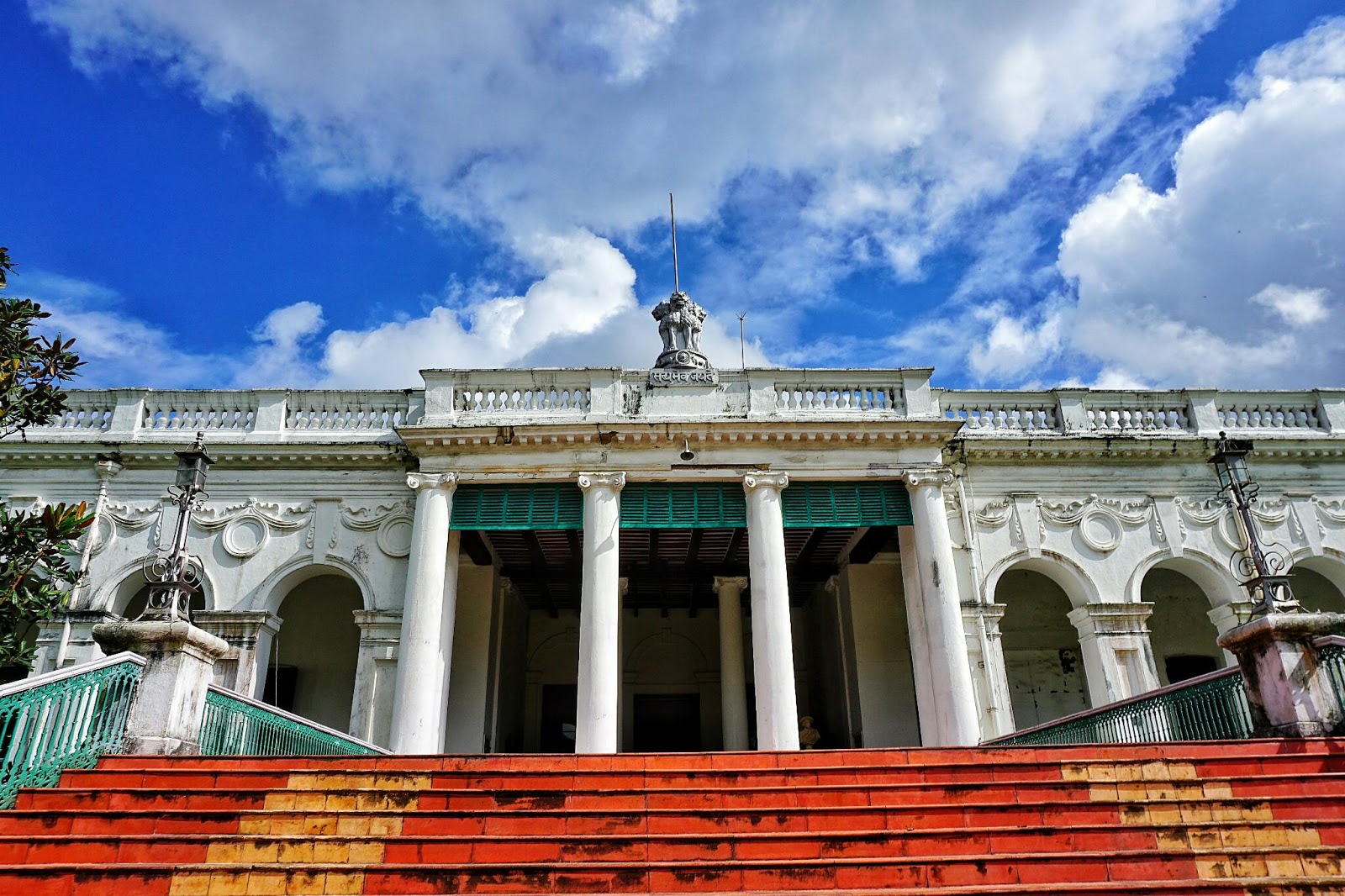
The city defeated me. It refused to be bent into shape; it stayed a willful, sprawling, sinful place. It even told me as much. When i walked through the gutted wreck of old building of National Library , i tripped and fell over a piece of rubble -- a graying stone. When i got to my feet and dusted myself down i saw that it read, in Latin, 'Resurgam' -- 'I Will Rise Again'...
Labels:
#calcutta
,
#heritage
,
#India
,
#kolkata
,
#nationallibrary
,
#ruins
,
#ruinsofacity
,
#Travel
,
#travelphotography
,
#worldheritage
Subscribe to:
Posts
(
Atom
)